
Perio charting: What do all those numbers mean?
Recently, a patient asked, “When I have a periodontal examination during a cleaning, what do all those numbers mean? What do you do with them?” Good questions, which we thought we’d answer here.
As our dental patient, you are regularly screened for oral cancer, bite problems, and periodontal disease at routine dental visits. But once every few years, we do a more comprehensive periodontal charting (CPC).
If you’re a long-time patient, you’re probably familiar with the routine: the hygienist calls in another staff member, and together they record all kinds of numbers for every tooth in your mouth. Maybe you’ve wondered yourself, what does it all mean?
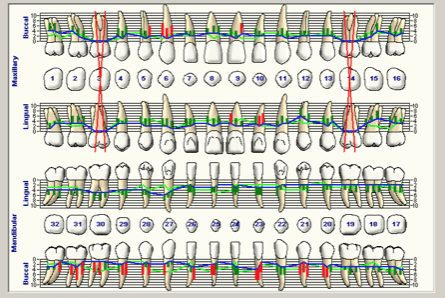
Periodontal disease, like many diseases, may not be obvious without testing. High blood pressure, high cholesterol, and high blood sugar levels must be measured in order to be evaluated. Similarly, the measurements we take during a CPC are one of the ways we test for signs of periodontal disease. A CPC serves several purposes in helping Dr. Conover monitor and assess your overall dental health.
An important part of your periodontal health is the depth of the pockets around each tooth. Since the top of the gum doesn’t attach directly to a tooth, there is a space or a pocket between the gum and the tooth. Pocket depths of 1-3 millimeters are normal. Deeper pocketing, especially with bleeding, is a sign of disease and may indicate that additional treatment is needed.
But in addition to pocket depths and bleeding, we are measuring other factors, including tooth mobility, gum recession, and the level of attached gingiva. All of these indicators are entered into the computer, and Dr. Conover carefully reviews the current and prior examination results to see if your periodontal health is improving, maintaining, or getting worse.
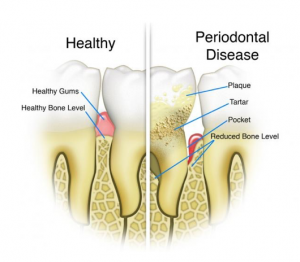
This information, in conjunction with a review of your most recent x-rays, gives Dr. Conover a more accurate assessment of your bone levels. Often, with periodontal disease, small changes happen over time. If identified early, periodontal disease is more easily managed, and the prognosis for your teeth is much better.
Because Dr. Conover is so thorough in his care, he is able to comprehensively evaluate your oral health and provide treatment recommendations tailored to your mouth in order for you to maintain or achieve a healthy and functional smile.
FAQs
Read answers to common questions about perio charting in Philadelphia, PA.
How often should I get perio charting done?
Most patients get a full perio charting once every 12 to 24 months. At Opus Dental Esthetics, Dr. Conover and his team recommend this comprehensive exam every few years to track changes in your gum health. In between, your hygienist will still check key areas during routine cleanings. Early detection of gum disease can save your teeth and your smile.
Does perio charting hurt?
Not at all. Your hygienist uses a small, gentle instrument called a periodontal probe. It looks like a tiny ruler with millimeter markings. They will carefully measure the space between your tooth and gum. You might feel a little pressure, but it should not be painful. If your gums are already sore or inflamed, you may feel some mild discomfort. Let your hygienist know, and they will work gently.
What happens if my gum pockets are deeper than 3 millimeters?
Pocket depths of 4 millimeters or more may be a sign of gum disease. Deeper pockets can trap bacteria that brushing and flossing cannot reach. Dr. Conover will review your numbers and your x-rays to see what is happening below the gum line. Depending on the severity, treatment options may include a deep cleaning (scaling and root planing), more frequent cleanings, or referral to a gum specialist called a periodontist.
Get Your Gum Health Under Control
Do you think you need a gum exam? Contact our office at 215-772-3100 or request an appointment online by visiting our website. We’re proud to serve Philadelphia patients who need gum disease treatment.